Projects where feelings take form as living worlds, including author-illustrated picture books and works across forms.
將感受轉化為具體世界的創作,包括自己書寫與繪製的繪本、專案與各類角色與形式。
Projects where feelings take form as living worlds, including author-illustrated picture books and works across forms.
將感受轉化為具體世界的創作,包括自己書寫與繪製的繪本、專案與各類角色與形式。
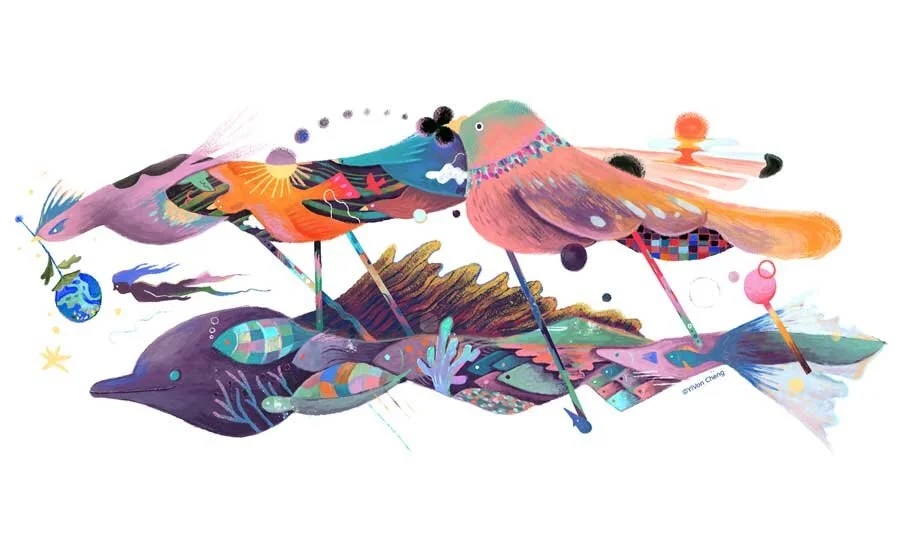
Digital, 2020.
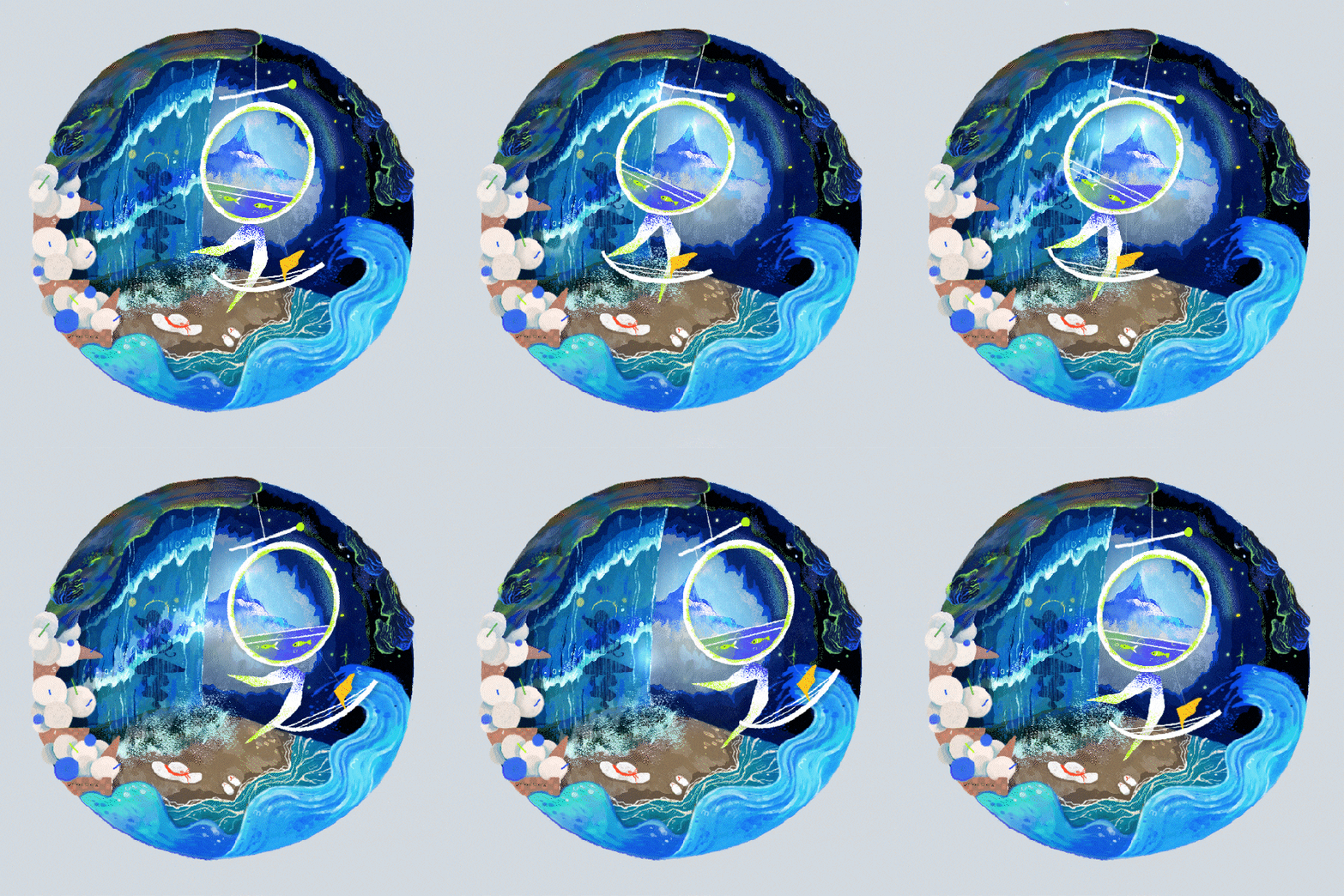
My contribution to the SEA CHANGE project.
‘We easily take everything for granted. However, if I really think about it. I understand nothing. Taking a fish for instance, do I really know this species? Their story? ‘This fish would become a window for me to the world. It’s a wonder to see the diversity of life.’
2016 Taipei Poetry Festival Honorable Mention
2019 AOI members exhibition in London
2016 台北詩歌節 佳作
2019 英國插畫家協會會員展
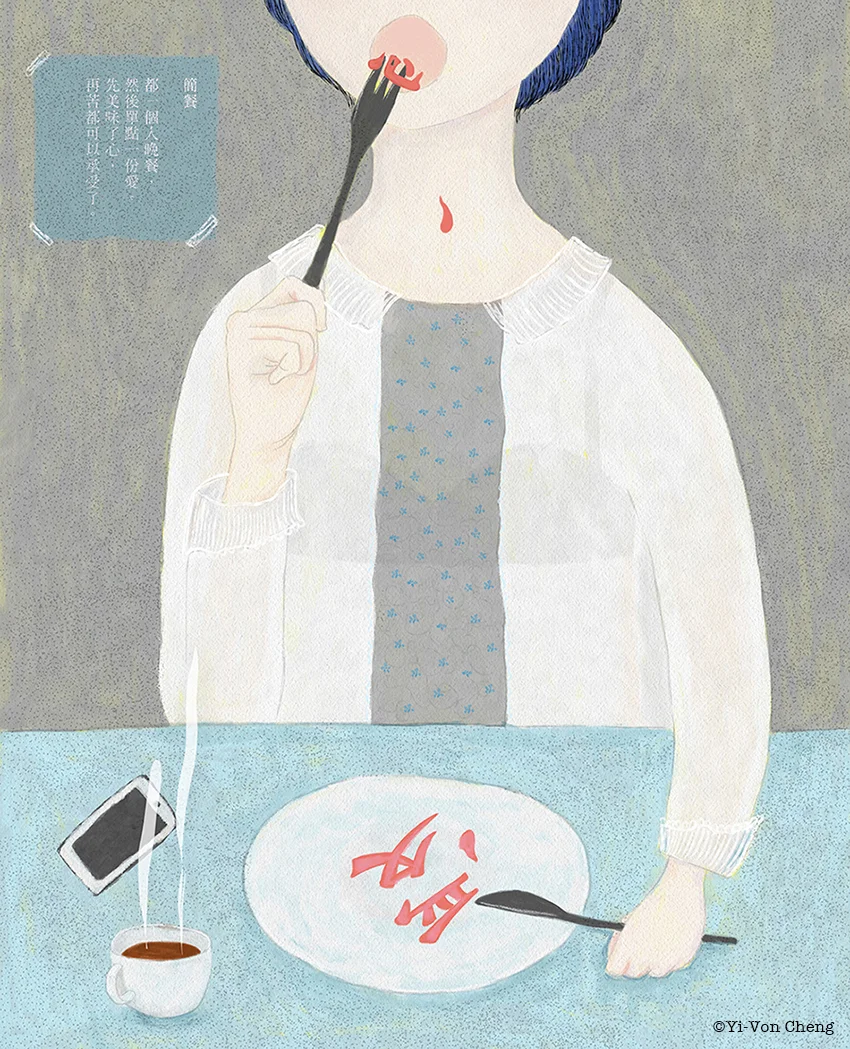
Love In Chinese character is written as 愛. It assembles two words together, the heart (心) and a word like suffering (受). The part which the lady is going to eat is the heart (心) .
Without the heart, there is only suffering (受) on her plate.
It is like love.
此作品投稿2016年台北詩歌節,當年徵稿主題為「多元成詩」,以多媒材、跨界創作詩為主。一直以來,我對圖像詩、具體詩深感興趣,同時也對(象形)文字和符碼的神秘和隱喻深感著迷。在幾幅個人創作中,我嘗試將繁體中文字解構,放入圖像中。這幅《簡餐》即是將「愛」字拆解成「心」和「受」兩個部分,透過自創的短詩,表達出都會男女單身的心情。
「都一個人晚餐,
然後單點一份愛,
先美味了心,
再苦都可以承受了。 」
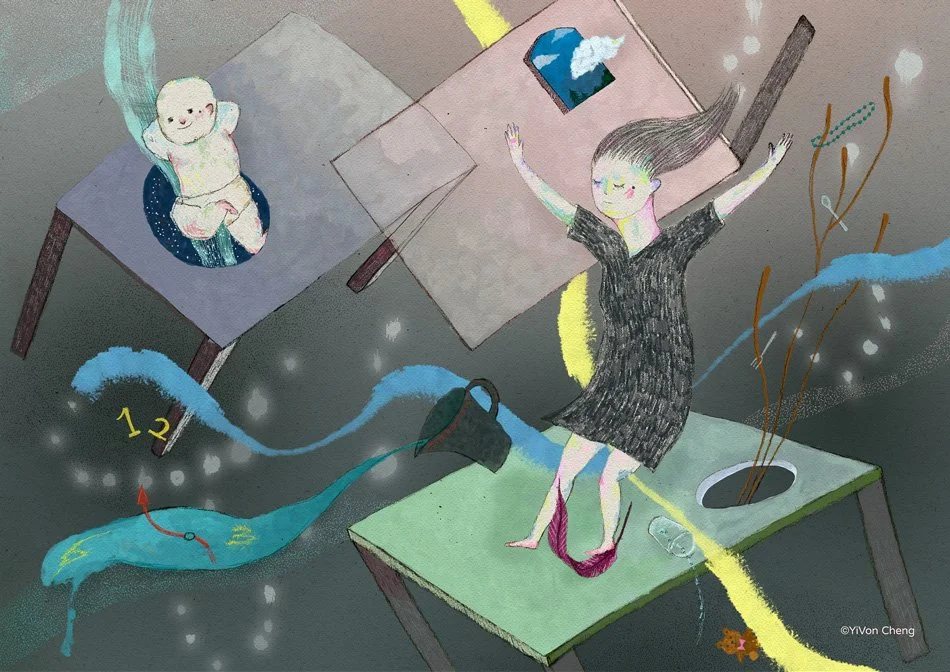
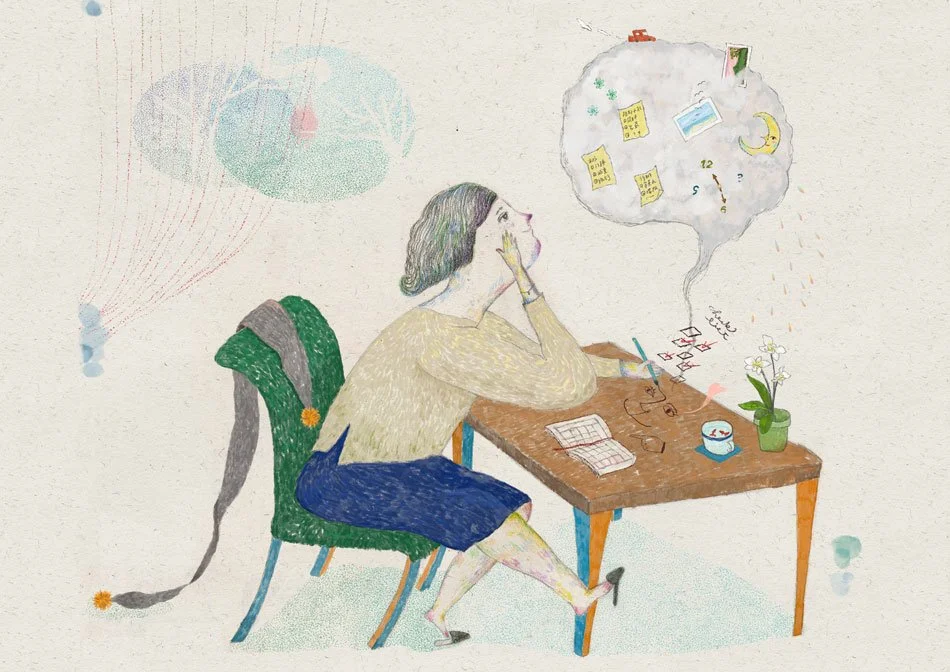
The tables / personal work (Oct. 2016)
(pre-selected in ILUSTRARTE 2018)
桌子系列。入選 2018 葡萄牙ILUSTRARTE插畫雙年展
pencil, colour pencil, and photoshop / available in shop (Giclée fine art print)
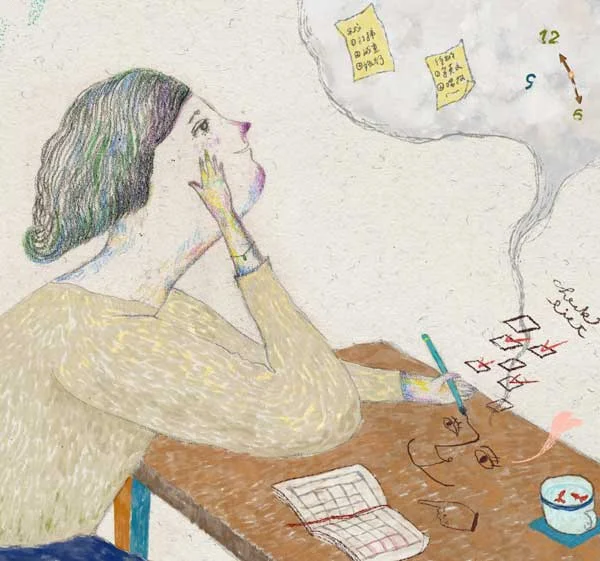
此系列作品是於英國留學期間第一學期的個人創作,以「桌子」作為主題。對我而言,桌子是為一個獨特有機的開放空間,人們圍繞在桌子度過他們的人生時光,當中像是生老病死重大時刻,或情感交流,瑣碎片刻像是發呆放空等等。另外,此主題也是2016年獲得台北詩歌節佳作的《簡餐》作品的延伸。桌子系列原有七幅作品,入選雙年展則是此三幅作品。每幅作品講述不同的人類情感,像是死亡與思念、慶典與喜悅、年老與懷念、思鄉等。當中有著三張漂浮桌子的「Perhaps the World Ends Here」則是以一首同名詩為文本發想,這首詩由美國詩人Joy Harjo所寫,她將人類的生老病死等重大時刻與桌子連結,與桌子系列主題概念十分相近。
These three illustrations are from my personal work 'the tables' series in the first semester at ECA in 2016. I see tables as organic, welcoming and open space for human beings to bring or join our emotions together, like Joy Harjo's poem 'Perhaps the world ends here'. She writes' We have given birth on this table, and have prepared our parents for burial here. At this table we sing with joy, with sorrow. We pray of suffering and remorse. We give thanks. Perhaps the world will end at the kitchen table, while we are laughing and crying, eating of the last sweet bite.'
Based on a poem by Joy Harjo
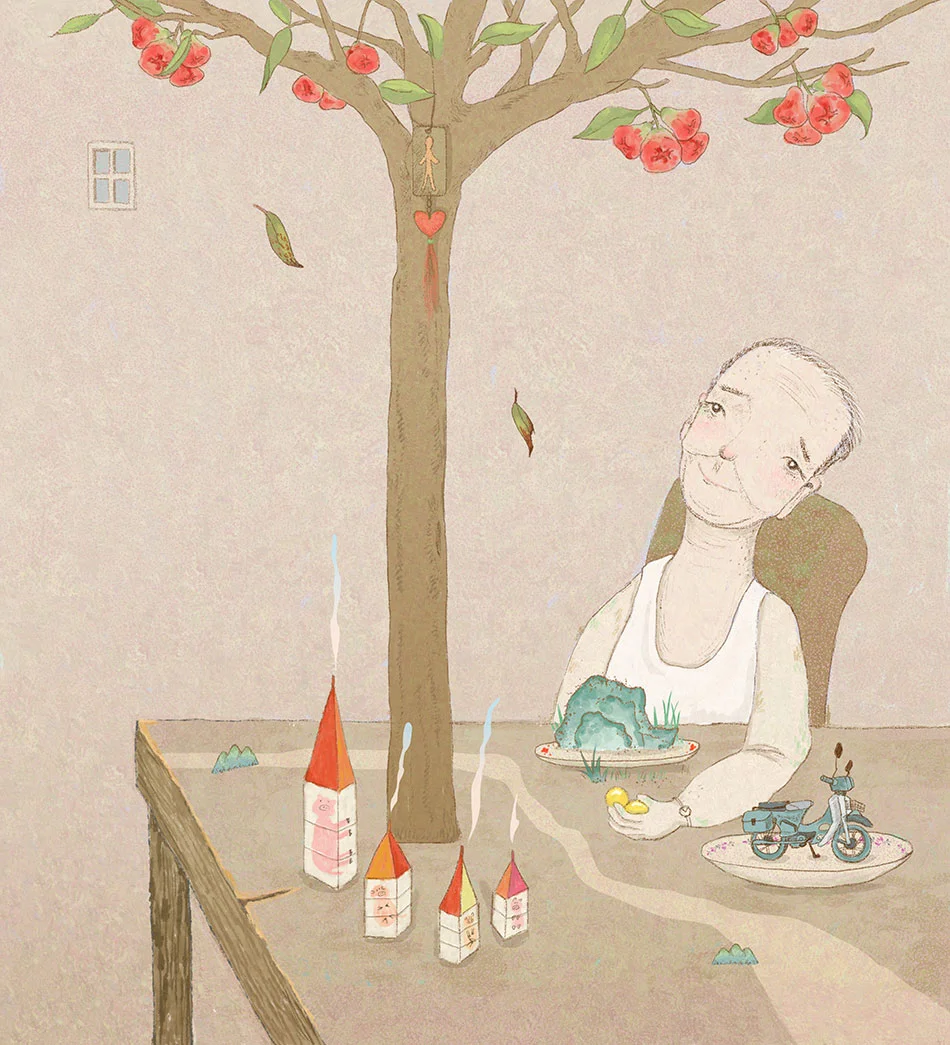
To understand the meaning of the four wee piggy houses :
The meaning of the decoration hung on the tree is ‘gratitude’.
It’s written as 恩 in Traditional Chinese. There are three parts including 大,口,and 心(heart) in this word。
此系列後續延伸為「the Petite Dharmmie 小達米」系列圖文,歡迎至 IG 欣賞。
This series later evolved into the Petite Dharmmie illustrated story series. You're warmly invited to explore it on Instagram.
Seasons
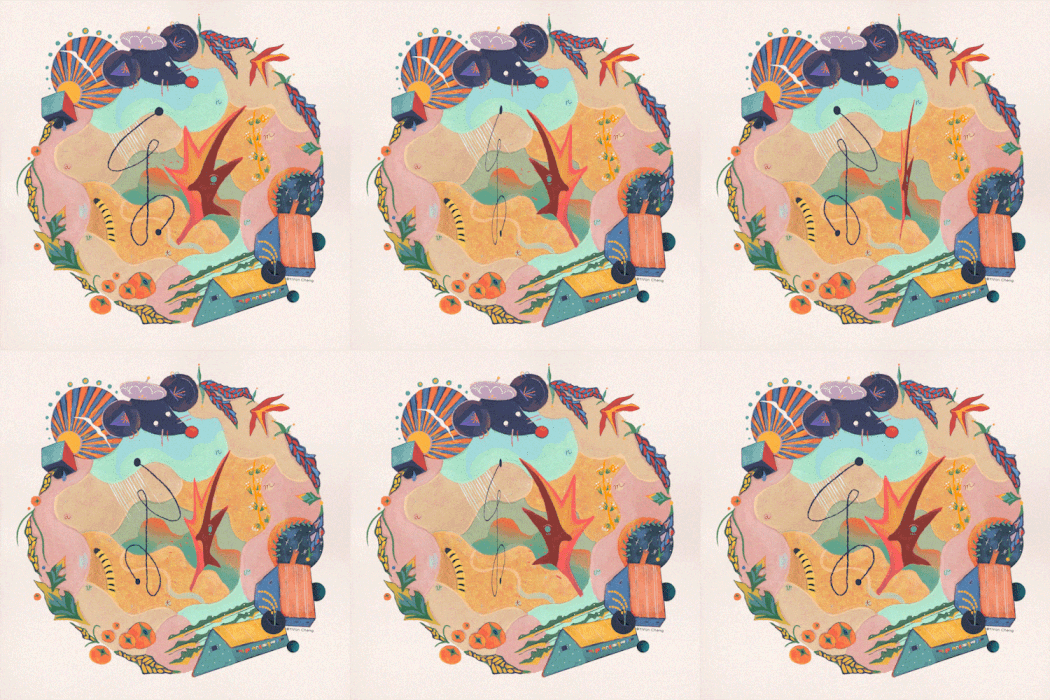
I've always loved Calder's mobiles and sometimes I add mobiles to my illustrations. For this particular project, I chose the four seasons as my theme. I wanted to use the pictographic traditional Chinese characters as the basic structures to create mobiles representing each season.
You may ask me why there's always a little rat in the illo. Well, that's because I started the project in 2020, the year of the Rat.
To see the high-quality video clip of these four different mobiles moving around please check my Vimeo this link.
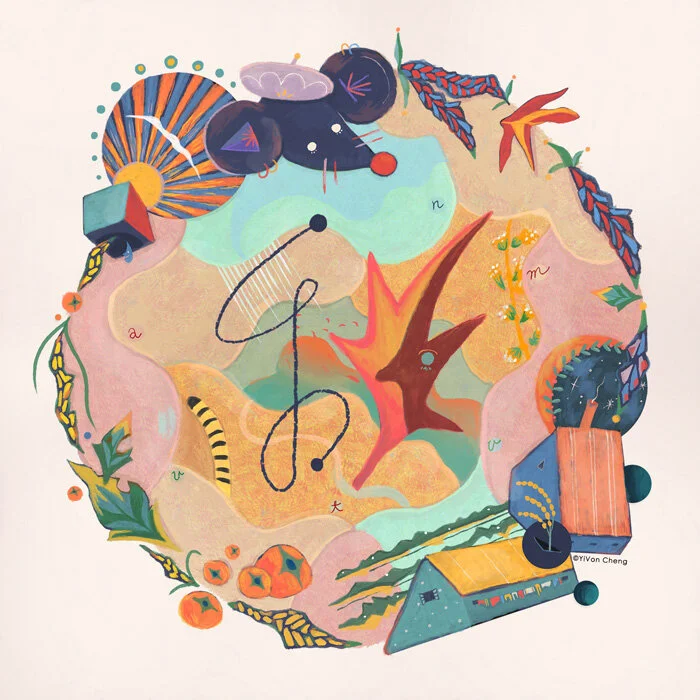
The mobile in the middle part is inspired by the word ‘Autumn ‘ in traditional Chinese character, written as 秋. The animated version is shown down below.
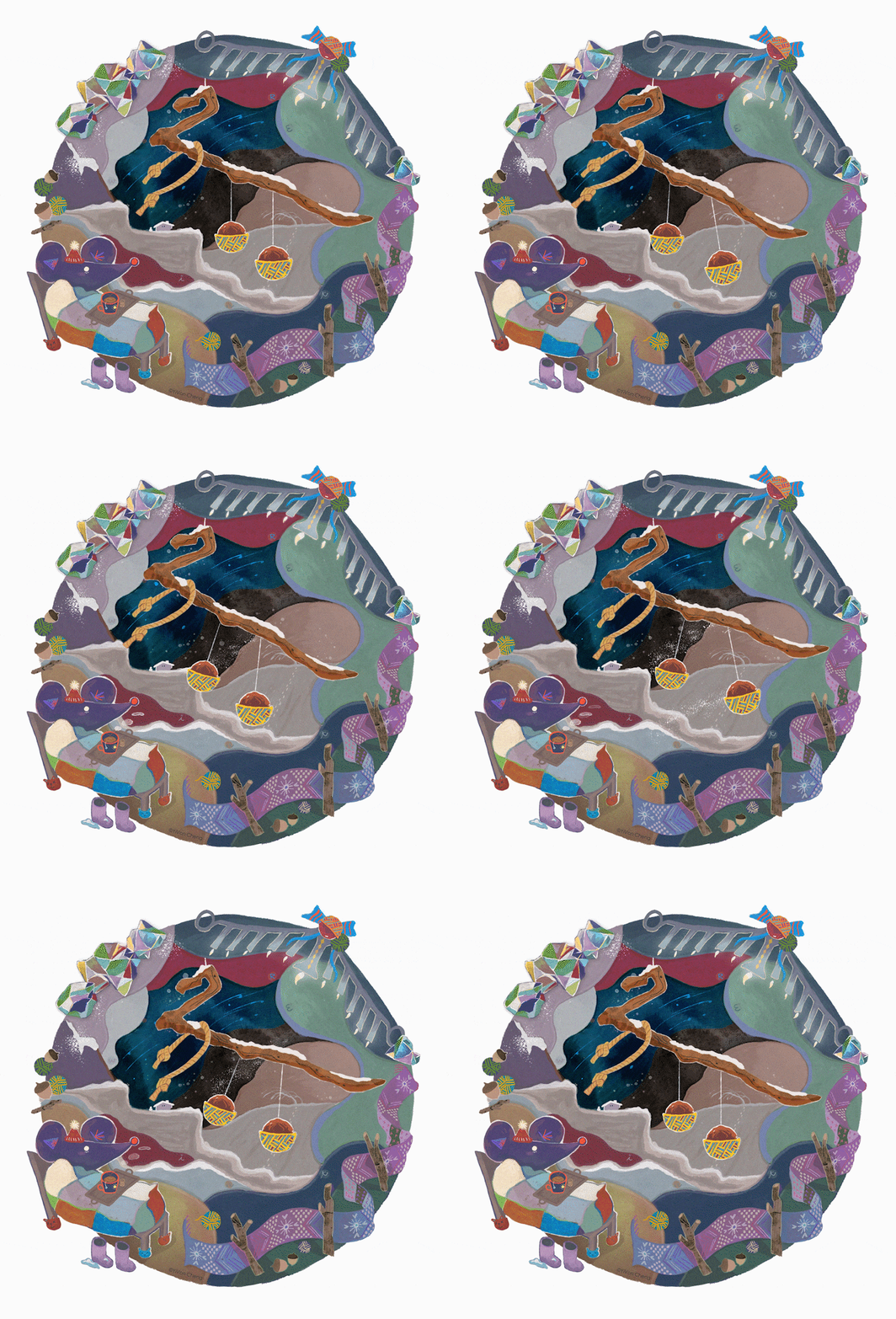
In traditional Chinese, Winter(pronounced as Dong) is written as 冬. The pictographic form originally depicts a rope with two knots on each side. Ancient people tied the knots to keep records. In this case, the two knots on the rope mean the end of one year. The ornament in this illo is inspired by the pictographic form.
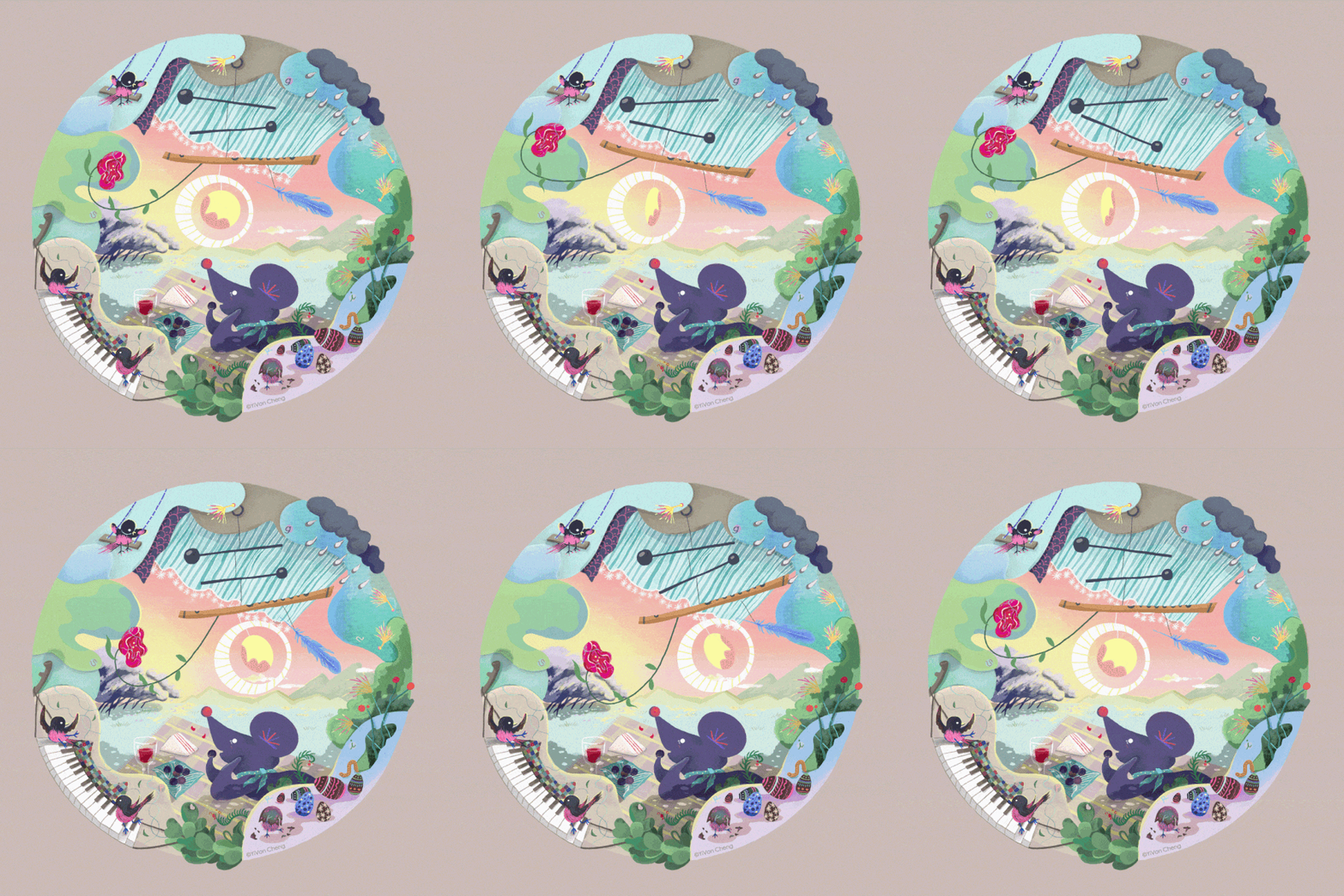
Spring, 春.
Spring is a pleasant season of the year. The bottom part of this traditional Chinese character is 日 which means the sun.